COE Guide

COE Prices 2025: Trends, Analysis & What to Expect

COE prices in Singapore have remained at historically elevated levels in 2025, with Category B prices consistently above S$100,000. Here’s a detailed analysis of the current market and what to expect going forward.

Current COE Prices (April 2025)

  • Category A (Small Cars): S$123,010
  • Category B (Large Cars): S$121,001
  • Category C (Commercial Vehicles): S$83,501
  • Category D (Motorcycles): S$9,290
  • Category E (Open): S$125,002

Key Factors Driving COE Prices

1. Vehicle Population Growth Cap

The LTA limits the growth of Singapore’s vehicle population to 0% (effectively keeping it flat). This means the number of new COEs issued each year is tightly controlled, creating scarcity and supporting high prices.

2. Strong Demand for New Vehicles

Despite high COE prices, demand for new vehicles remains robust, driven by rising household incomes and the desire for newer, more fuel-efficient models.

3. Electric Vehicle (EV) Adoption

The growing popularity of EVs has increased competition for Category A and B COEs, as many popular EV models fall into these categories.

4. Commercial Vehicle Demand

Strong logistics and e-commerce growth has kept Category C (commercial vehicle) COE prices elevated.

Price Outlook for 2025

Based on current trends and LTA’s quota announcements:

  • Short-term (Q2 2025): Prices likely to remain stable or slightly increase due to continued strong demand.
  • Medium-term (H2 2025): Potential for modest price corrections if LTA increases quotas or demand softens.
  • Long-term: COE prices are expected to remain elevated as Singapore maintains its vehicle population cap.

What This Means for COE Renewal

With PQP rates tracking the high bidding prices, COE renewals are more expensive than ever. However, the alternative — buying a new vehicle with a fresh COE — is even more expensive. For many vehicle owners, renewal remains the more cost-effective option.

Planning Your COE Renewal

Given the current price environment, we recommend:

  1. Start planning your renewal 6-12 months in advance
  2. Lock in financing early to take advantage of current rates
  3. Consider a 10-year renewal if your vehicle is in good condition
  4. Bundle your renewal with insurance for potential savings

Contact COE Plus for a free consultation on your COE renewal strategy.


Ready to Renew Your COE?

Join 5,000+ satisfied customers who renewed their COE through COE Plus — completely free of charge. Get your personalised quote in minutes.
Read More...

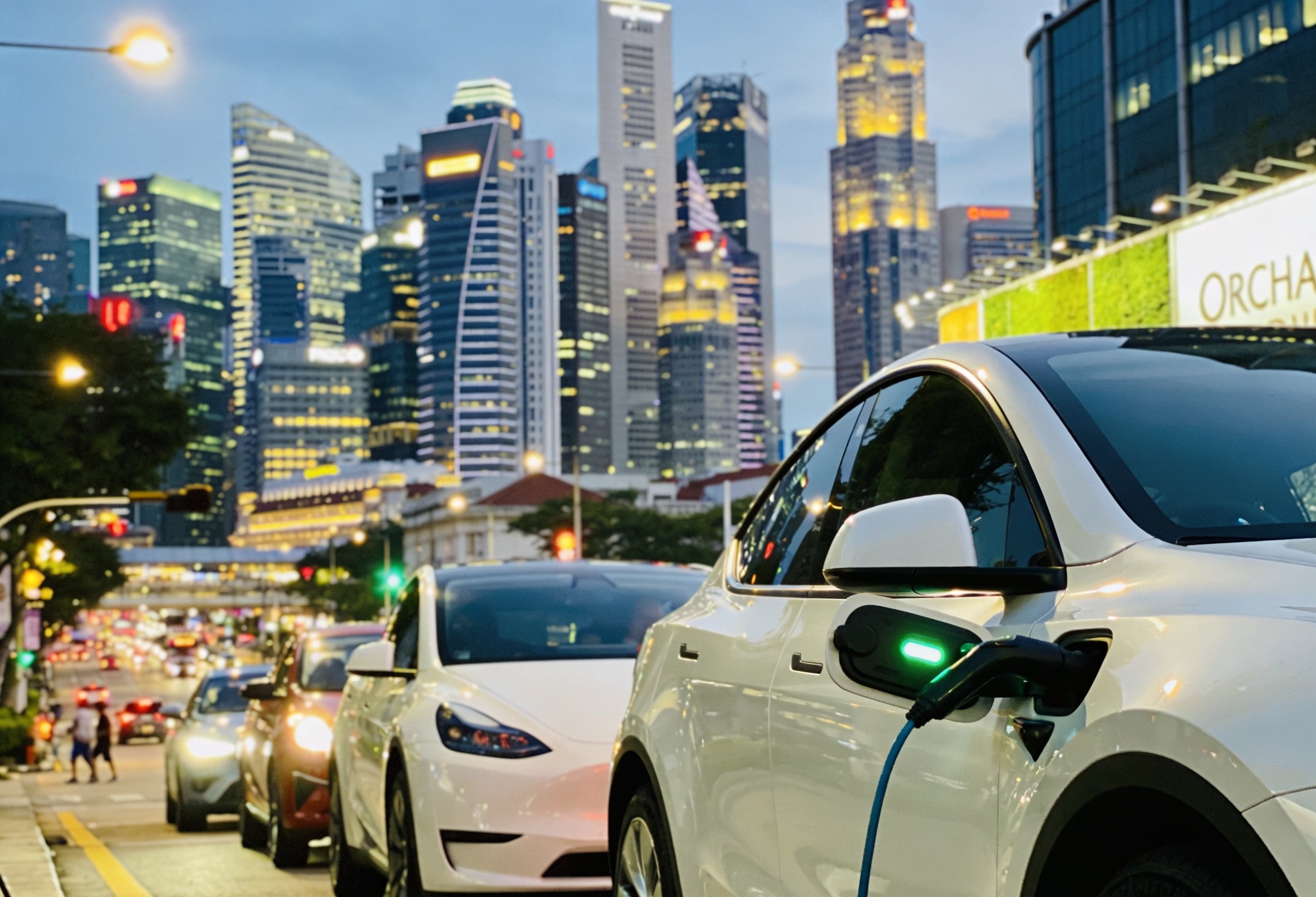
Electric Vehicles and COE: What EV Owners Need to Know

Singapore’s push towards electric vehicles (EVs) has created new considerations for COE planning. Whether you’re buying a new EV or renewing the COE on an existing one, here’s what you need to know.

Which COE Category Do EVs Fall Under?

EV COE categorisation is based on maximum power output, not engine capacity (since EVs don’t have traditional engines):

  • Category A: EVs with maximum power output not exceeding 97kW (e.g., some BYD models, Hyundai Ioniq 5 Standard Range)
  • Category B: EVs with maximum power output exceeding 97kW (e.g., Tesla Model 3, BYD Atto 3, Hyundai Ioniq 6)
  • Category E: High-performance EVs (e.g., Tesla Model S, Porsche Taycan)

Government Incentives for EVs

EV Early Adoption Incentive (EEAI)

The government has offered various incentives to encourage EV adoption, including rebates on the Additional Registration Fee (ARF). Check the LTA website for the latest incentive schemes.

Road Tax Rebates

EV owners enjoy road tax rebates as part of the government’s push to reduce carbon emissions.

Charging Infrastructure

Singapore is rapidly expanding its EV charging network, with targets for widespread charging availability by 2030.

COE Renewal for EVs

When your EV’s COE expires, the renewal process is the same as for conventional vehicles:

  • Pay the PQP for your vehicle’s COE category
  • Choose between 5-year and 10-year renewal
  • Arrange financing if needed

Special Considerations for EV COE Renewal

Battery Condition

Before renewing your EV’s COE, have the battery health assessed. EV batteries degrade over time, and a battery with significantly reduced capacity may affect the vehicle’s value and your decision to renew.

Battery Replacement Costs

Factor in potential battery replacement costs when deciding on COE renewal. A new EV battery can cost S$15,000–S$40,000 depending on the model.

Technology Obsolescence

EV technology is evolving rapidly. A 10-year-old EV may have significantly less range and fewer features than current models. Consider whether the technology will remain relevant for your needs.

Is COE Renewal Worth It for EVs?

The decision depends on:

  • Battery health and remaining capacity
  • Cost of battery replacement vs. new vehicle
  • Available government incentives for new EVs
  • Your driving needs and range requirements

Get Expert Advice

COE Plus has specialists who understand the unique considerations for EV COE renewal. Contact us for a free consultation tailored to EV owners.


COE Renewal Calculator

Estimate your renewal cost & monthly repayments

%
% p.a.
Current PQP (Cat A): S$119,432


Ready to Renew Your COE?

Join 5,000+ satisfied customers who renewed their COE through COE Plus — completely free of charge. Get your personalised quote in minutes.
Read More...

Understanding COE Categories: A to E Explained

Singapore’s COE system divides vehicles into five categories, each with its own quota and bidding price. Understanding which category applies to your vehicle is essential for planning your COE renewal.

Understanding COE Categories In Singapore

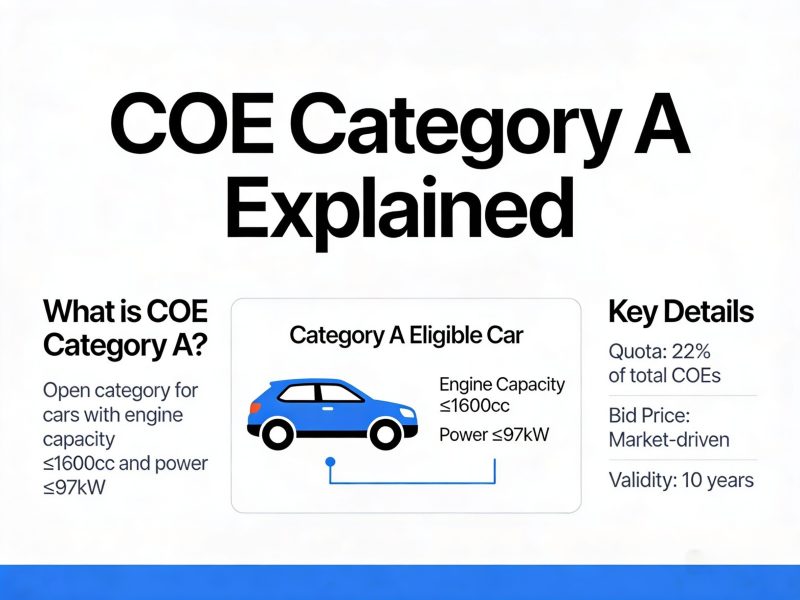
Category A — Small Cars

Vehicles covered: Cars with engine capacity up to 1,600cc AND maximum power output not exceeding 97kW (about 130 bhp).

Examples: Toyota Vios, Honda Jazz, Mazda 2, Volkswagen Polo

Current PQP: Approximately S$121,000

Category A COEs are typically cheaper than Category B, making them popular for budget-conscious buyers. However, the price difference has narrowed significantly in recent years.

Understanding COE Categories

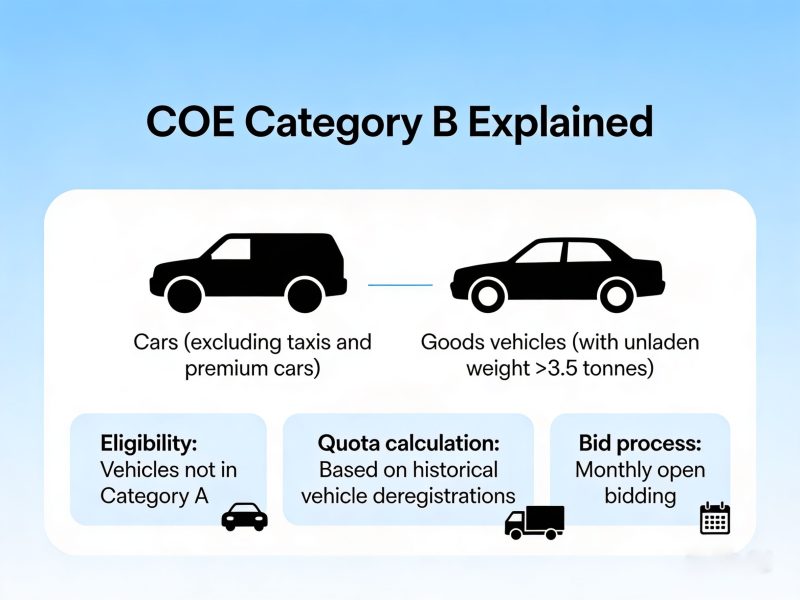
Category B — Large Cars

Vehicles covered: Cars with engine capacity above 1,600cc OR maximum power output exceeding 97kW.

Examples: Toyota Camry, Honda Accord, BMW 3 Series, Mercedes C-Class

Current PQP: Approximately S$119,000

Category B is the most popular COE category for mid-size and luxury vehicles. Prices have historically been among the highest due to strong demand.

Understanding COE Categories

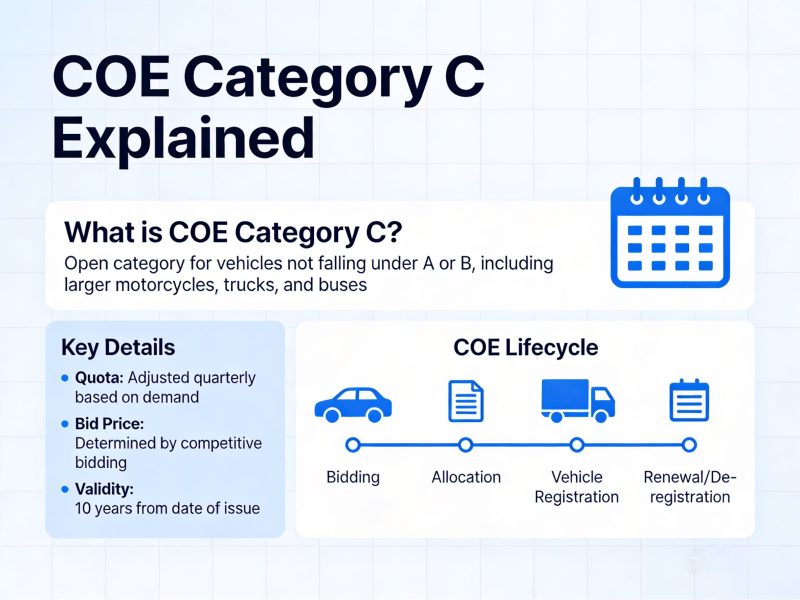
Category C — Goods Vehicles & Buses

Vehicles covered: Goods vehicles and buses.

Examples: Lorries, vans, pickup trucks, minibuses, school buses

Current PQP: Approximately S$82,000

Category C COEs are essential for businesses that rely on commercial vehicles. The quota is typically smaller than passenger car categories.

Understanding COE Categories

Category D — Motorcycles

Vehicles covered: All motorcycles.

Examples: Honda CB500, Yamaha MT-07, Kawasaki Ninja

Current PQP: Approximately S$9,100

Category D has the lowest COE prices of all categories, reflecting the lower cost of motorcycles compared to cars.

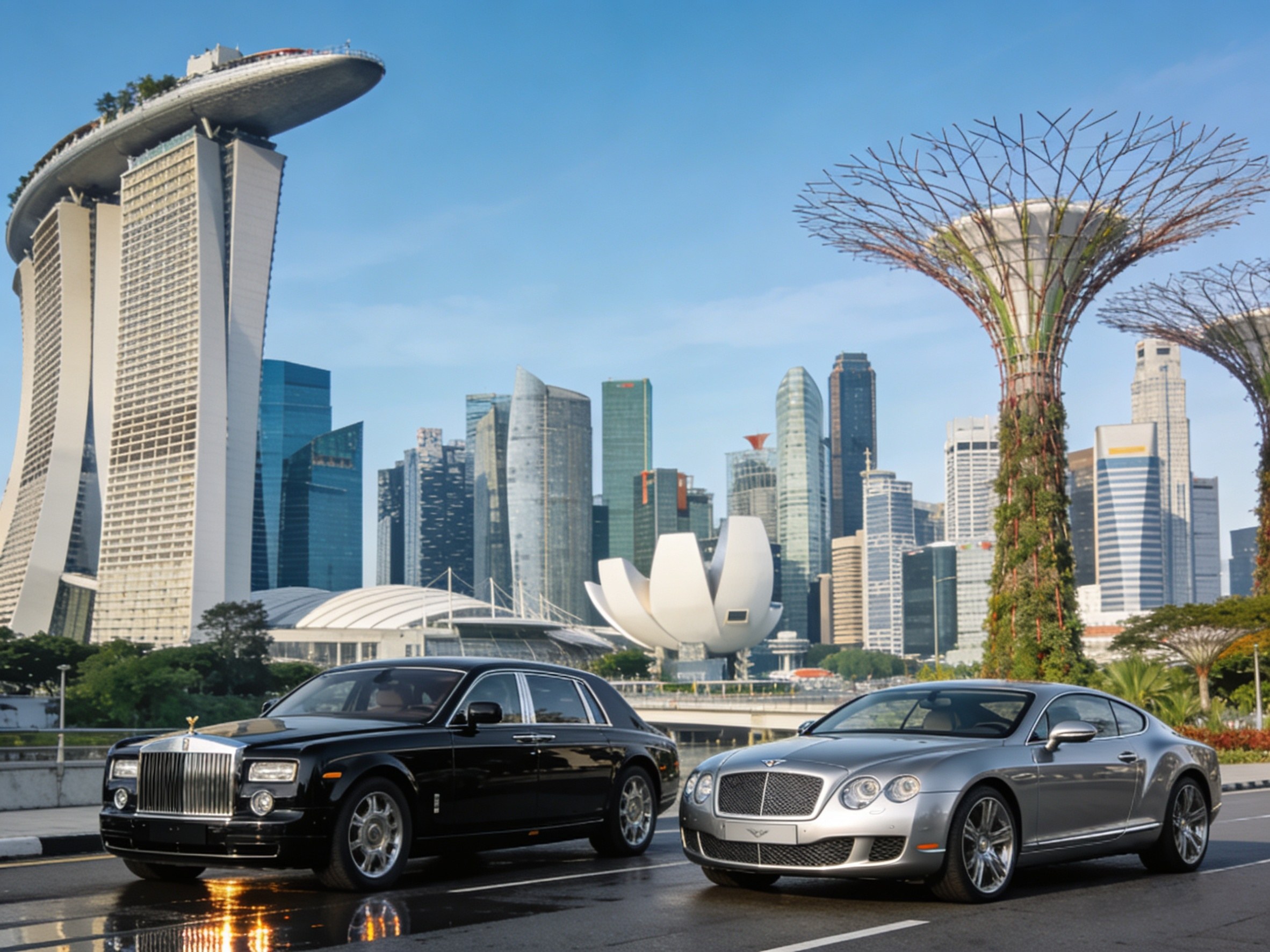
Category E — Open (All Vehicles)

Vehicles covered: Any vehicle type — the most flexible category.

Current PQP: Approximately S$123,000

Category E COEs can be used for any vehicle type. They are typically the most expensive category due to their flexibility and are often used for luxury or high-performance vehicles that exceed Category B specifications.

Which Category Do I Need?

Your vehicle’s COE category is determined at the time of registration and cannot be changed. When renewing your COE, you will renew in the same category as your original COE.

Use our COE Renewal Calculator to estimate your renewal costs based on your vehicle’s category.


Ready to Renew Your COE?

Join 5,000+ satisfied customers who renewed their COE through COE Plus — completely free of charge. Get your personalised quote in minutes.
Read More...